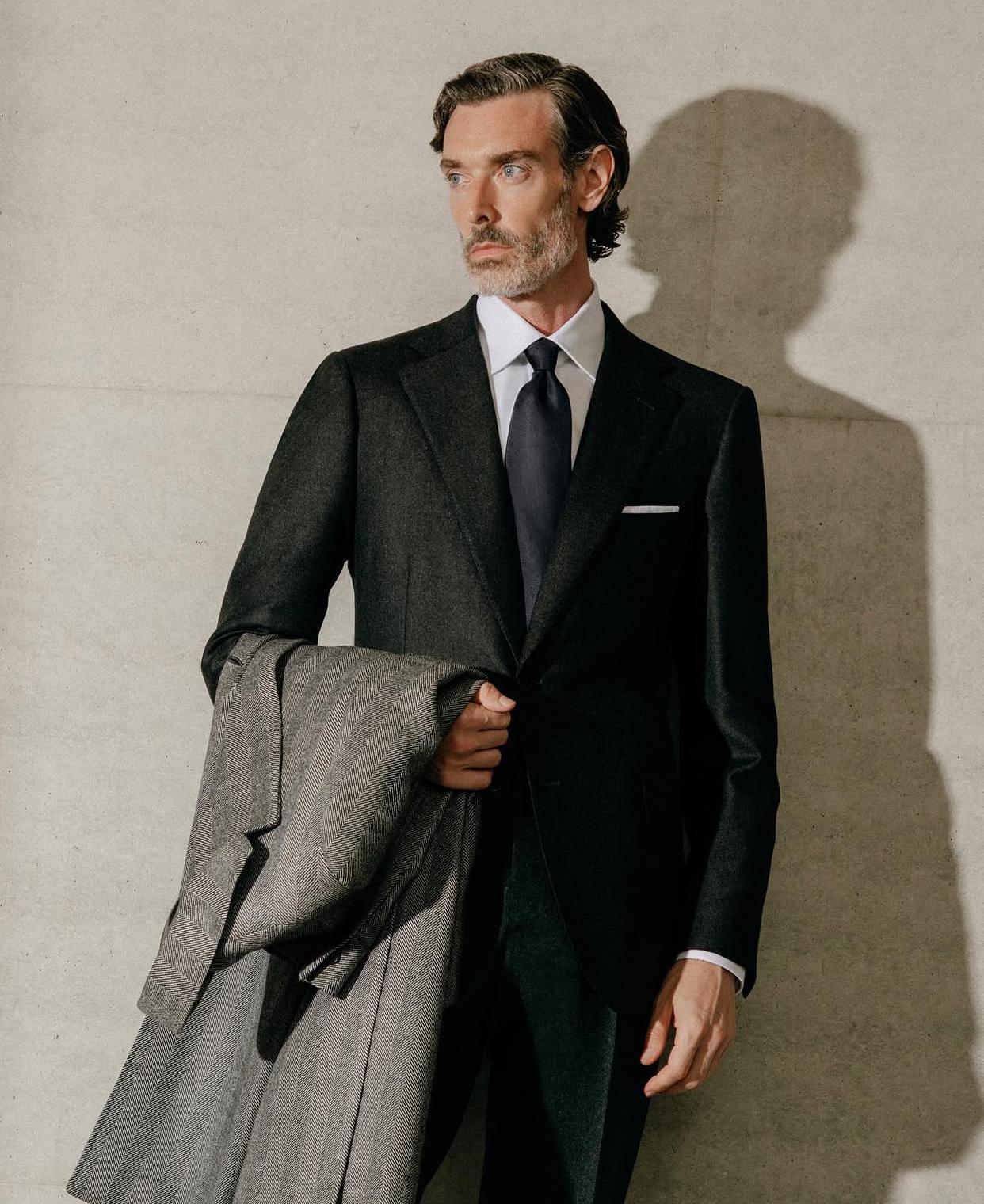
OUTERWEAR / PRODUCT STUDYIMAGE

Tailoring and outerwear are read as a three-dimensional system of body, pattern, cloth, internal structure, pressing, fitting and manufacturing route.
BODY · PATTERN · CLOTH · STRUCTUREBalance, ease, pattern, cloth, canvas or interlining, shoulder, sleeve setting, pressing and fitting act together. The same silhouette may arise from different constructions; the same construction may produce different silhouettes.
Read form, construction, process and ecosystem together: proportion is inseparable from cloth behaviour, internal architecture, specialist capability and manufacturing route.
A tailoring family can be encoded through recurring relationships of shoulder, gorge, lapel, button stance, length, quarter opening, pockets, internal structure and cloth — governed as ranges rather than fixed measurements.
Shoulder · gorge · lapel · stance · length · quarters · pockets
Fit is the equilibrium between body measurements, designed ease, posture and garment geometry. Pattern distributes balance, suppression, sidebody, armhole depth and sleeve pitch before construction reinforces the result.
Posture · balance · ease · sidebody · armhole · sleeve pitch
Weight alone does not predict behaviour. Fibre, yarn, weave, density, drape, recovery, nap and finishing determine how cloth responds to cutting, pressing, structure and wear.
Weight · weave · drape · recovery · nap · pressing response
Fused, half-canvas and full-canvas are construction systems, not handwork rankings. Chest piece, haircloth, tapes, shoulder support and pressing distribute resilience, roll and form.
Fused · half canvas · full canvas · chest piece · shoulder · pressing
Classic coat construction, splittable double-face and technical laminate outerwear follow different architectures. Layering ease, sleeve system, collar, back, insulation and seam strategy must be defined by the product.
Set-in · raglan · double-face · laminate · insulation · seam sealing
A sample is not only a visual check. Fitting isolates balance, ease, collar, sleeve pitch, seat or vent behaviour and cloth response; corrections are transferred into pattern and process before pre-production.
Prototype · fitting · defect diagnosis · pattern correction · pre-production
The right partner depends on category, complexity, stage, quantity, target cost, calendar and required control. Capability is demonstrated process competence at repeatable tolerances; capacity and geography are separate variables.
Capability · capacity · process range · quality system · MOQ · route
Canvas or interlining, chest support, shoulder, sleeve head, collar, lapel roll and pressing control how the garment holds, moves and returns to shape.
A tailored jacket, coat, trench, double-face piece or technical shell can follow different pattern, material and manufacturing architectures. Typology, silhouette, construction and process must be read separately.
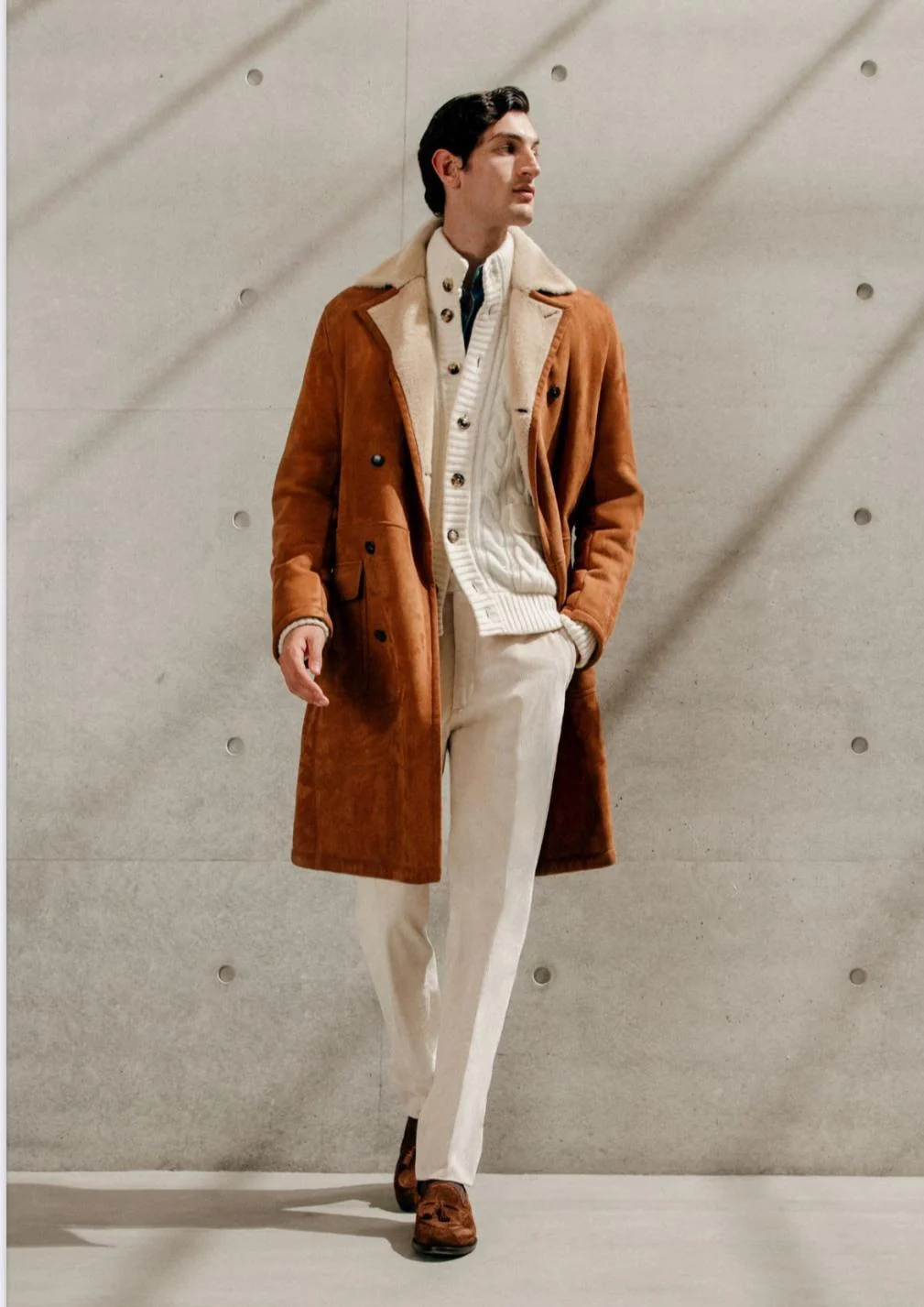
The manufacturing route links development, materials, specialists, factory, quality and scale. Product stage, complexity, quantity, target cost and calendar determine the route; a prototyping specialist and a bulk manufacturer do not need to be the same.